
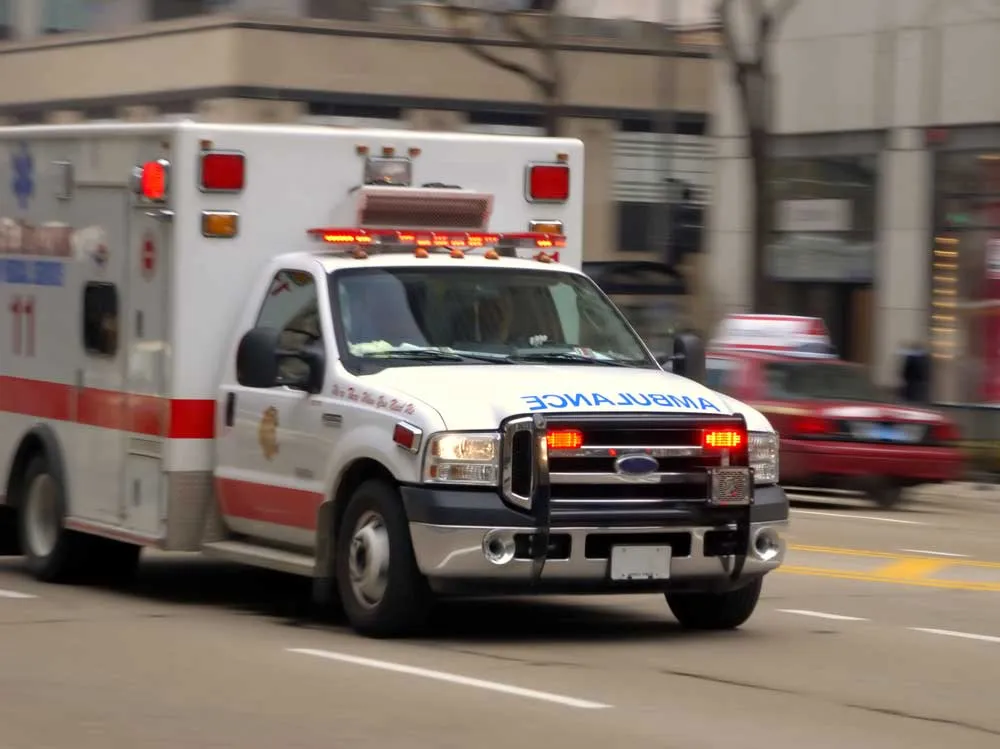
For years, EMS agencies handled controlled substances in a legal gray area. Agencies borrowed a medical director's DEA registration, restocked from hospitals under informal arrangements, and kept narcotic logs that varied from one station to the next. That changed on March 9, 2026, when the DEA's final rule for EMS agencies took effect.
The most common question we hear from chiefs and EMS coordinators is simple: who has to sign when a controlled substance moves, and when do we need a witness? The answer is more specific than "always get two signatures." The federal rule is precise about what it requires, and your state rules and medical director usually add more on top. This guide covers both.
The Law at a Glance
| Milestone | Date | What it did |
|---|---|---|
| Protecting Patient Access to Emergency Medications Act of 2017 (PPAEMA), Public Law 115-83 | Signed November 17, 2017 | Amended the Controlled Substances Act (21 U.S.C. 823(k)) to create a DEA registration for EMS agencies and to allow standing orders |
| DEA proposed rule (85 FR 62634) | October 5, 2020 | Draft regulations, open for public comment |
| DEA final rule, "Registering Emergency Medical Services Agencies Under the PPAEMA" (91 FR 5216) | Published February 5, 2026 | Added the EMS registration, security, recordkeeping, and delivery rules to 21 CFR |
| Effective date | March 9, 2026 | The requirements below now apply |
The sections that matter most for moving controlled substances are:
- 21 CFR 1301.20: EMS agency registration, including one registration per state and designated locations (stationhouses)
- 21 CFR 1301.80: secure storage, vehicle locking, and jump bags
- 21 CFR 1304.04: two-year record retention, and where records are kept
- 21 CFR 1304.27: EMS-specific records for administration, waste, deliveries, and destruction
- 21 CFR 1307.14 and 1307.15: hospital restocking, plus deliveries during shortages, public health emergencies, and mass-casualty events
What Federal Law Actually Requires for Signatures and Witnesses
The DEA rule doesn't use a single "two signatures on everything" standard. It sets out exactly whose identity has to appear on which record:
Deliveries between locations
- A delivery to a registered or designated location must be accepted by the medical director, or a person the medical director has designated in writing.
- The record must include the name and title of the person who received the controlled substances, plus the substance, finished form, units per container, number of containers, date, and the name and address of the receiving location (1304.27(b)(3)). The DEA's explanation of the rule adds that the person accepting the delivery provides their signature, title, the date received, and the quantity.
Every dose administered or wasted
For each dose, 1304.27(a) requires a record of:
- Name of the substance
- Finished form (for example, 10 mg/mL)
- Date administered or disposed of
- Patient identification, if applicable
- Amount administered
- Last name or initials of the person who administered it
- Last name or initials of the medical director or authorizing medical professional who issued the order
- Whether a standing or verbal order was issued and adopted
- Amount disposed of, if applicable
- Manner of disposal
- Last name or initials of the person who disposed of it, and of the witness to the disposal, if applicable
In other words, the federal rule names a witness for waste. If your agency wastes the unused part of a dose, the record must identify the person who wasted it and the witness.
Do people have to initial personally? No. In the final rule, the DEA changed "initials" to "last name or initials" and explained that the record only has to accurately identify each person, so it's clear under whose authority the drug was given. The DEA also noted that having each person initial or sign themselves is often the best way to keep records accurate.
Destruction of stock
Destroying expired or damaged inventory (as opposed to wasting part of a dose) needs a record of the substance, form, quantity, date, manner of disposal, and the name and title of the person destroying it (1304.27(b)(4)). The DEA's general disposal rules in 21 CFR Part 1317 also apply. Most agencies send expired stock to a reverse distributor.
Where the "always two signatures" rule comes from
Many agencies require a second signer on every movement: station safe to vehicle, shift handoff counts, and restocks. That is usually a state EMS or board of pharmacy requirement, a medical director protocol, or agency policy, not the federal text. It is still the smart standard. A witnessed signature at every step is what turns a log into an unbroken chain of custody, and it's the first thing investigators look for after a discrepancy. Federal rules set the minimum. Where your state is stricter, the stricter rule applies.
Moving Controlled Substances: Scenario by Scenario
1. Registered location to a stationhouse
- The stationhouse must be a designated location: an enclosed structure in the state of registration, actively and primarily used by the agency.
- Register it with the DEA online at DEAdiversion.usdoj.gov at least 30 days before the first delivery.
- The delivery is not treated as "distribution," so no DEA Form 222 is needed. It still needs the 1304.27(b)(3) record, with the receiver's name and title.
2. Between two designated locations
- The receiving location must notify the agency's registered location within 72 hours.
3. Restocking from a hospital after a call
- Allowed without a DEA Form 222, provided the agency keeps a 1304.27(b) receipt record and the hospital keeps its own delivery record.
- If the vehicle is based at a designated location, that location must notify the registered location within 72 hours.
4. Station safe to vehicle, jump bag, and back
- Controlled substances must be kept in a securely locked, substantially constructed cabinet or safe that can't be readily removed, or in an automated dispensing machine at a registered or designated location.
- A vehicle carrying controlled substances must be locked when parked outside an enclosed station, or when left unattended at a non-emergency stop such as a meal break. It doesn't need to be locked inside an enclosed station, at an emergency scene, or while crew members are present.
- Crew members may carry drugs on their person or in a jump bag while responding, but must return them to the safe when they are no longer responding.
5. Shortages, public health emergencies, and mass-casualty events
- Hospitals and EMS locations may deliver controlled substances to each other only with written approval from the DEA Special Agent in Charge for the area, or from DEA Headquarters (1307.15).
Recordkeeping Rules That Apply to Every Movement
- Keep records for at least 2 years, available for DEA inspection and copying.
- Records must include deliveries between all locations of the agency.
- Keep records at each registered and designated location where the drugs are received, administered, or disposed of. Electronic records are allowed.
- Keep standing and verbal orders on file at a registered location, along with the documents that define each provider's authority to administer, such as protocols and practice agreements.
- Theft or significant loss still falls under the existing DEA rules: notify the DEA field office in writing within one business day of discovery, then file DEA Form 106.
Your Compliance Checklist
- Confirm your registration path. Choose either an EMS agency registration (one per state, 3-year term, Schedules II–V) or a hospital-based agency operating under the hospital's registration. Government-run agencies are exempt from the fee.
- Designate every stationhouse that stores drugs, at least 30 days before the first delivery.
- Put receiving authority in writing. Get a signed memo from the medical director that names who may accept deliveries at each location.
- Write a chain-of-custody SOP that requires a signer and a witness for every move, waste, removal, and safe count, even where federal law requires less. Check it against your state rules.
- Standardize the dose record so all 11 data points in 1304.27(a) are captured on every call, including the waste amount and the witness.
- Set up 72-hour notifications for hospital restocks and transfers between designated locations.
- Audit storage and vehicles: safes, locking practices, and how jump bags are returned after a call.
- Run shift-change counts with both the on-coming and off-going crew member signing. Document discrepancies the moment they're found.
- Have a theft and loss playbook: who is notified internally, who contacts the DEA within one business day, and who files Form 106.
- Make records retrievable. Any record from the last two years, at any location, should take minutes to produce, not days.
Where Agencies Get Caught Out
- Waste without a witness. The unused part of a dose goes in the sharps container and only one name goes on the run report.
- Witnessing your own entry. The same person's initials appear as both signer and witness, or a "witness" signs the log hours later.
- Hospital restocks that never reach the station log. Paper logs rarely make the 72-hour notice reliable.
- Records tied to the box, not the vial. Without tracking each vial by lot and serial, a missing vial can't be traced to a specific transfer.
- An unsigned receiving authority. Crews accept deliveries, but nobody can produce the medical director's written designation.
How Public Safety Check Handles Chain of Custody
Public Safety CheckTM added a Narcotic Tracking module in September 2026, built around the same transfer-by-transfer chain of custody described above:
- Scan it in. Add each medication by barcode or NDC scan, or enter it manually, with its package amount.
- Signed and witnessed at every step. Move (between safes or to a vehicle), Administer to a Patient, Remove (Damaged, Expired, or Missing), and Safe Verification all require a primary signer and a witness. The system rejects a witness who is the same person as the signer.
- Your choice of signature method. Use a drawn digital signature, a badge scan, or both. For a witness who isn't in the system, such as an ER nurse or physician, you record their full name and date of birth.
- Waste calculated, not guessed. When you administer a dose, the system calculates the amount wasted from the package amount on hand and requires a waste description. Multi-dose bottles track a running quantity remaining.
- Safe handoffs and recounts. Manage Safes and Safe Verification support shift handoffs and recounts, with discrepancy notes required when a count doesn't match.
- Automatic alerts. The Narcotics Officer gets an email automatically when a medication is removed as Damaged or Missing, so the one-business-day clock doesn't start without anyone knowing.
- Inspection-ready reports. Five reports cover the program: by Serial Number, by Safe, by Provider, Full Inventory, and Full Activity. The Unit Status Autoreport, added in October 2026, emails each unit's assigned officers about narcotics that have expired or expire within 60 days.
Every transfer signed, witnessed, and on file
Public Safety CheckTM gives every vial a full chain of custody, from scan-in to administration or removal, with a signer and witness at each step and reports you can pull when the DEA asks. Every module, including Narcotic Tracking, is included for $1,999/year with unlimited users.
Book a Free Demo See Platform FeaturesThis article is a summary for planning purposes, not legal advice. It reflects the DEA final rule published February 5, 2026 (91 FR 5216), effective March 9, 2026. Always check current requirements against 21 CFR, your state EMS and board of pharmacy rules, and your medical director's protocols. State requirements are often stricter than federal ones, and some states are still updating their rules to match the DEA's.